
The ‘Both, And’ Philosophy: How the Finale Encapsulates Industry’s Core Moral Ambiguity

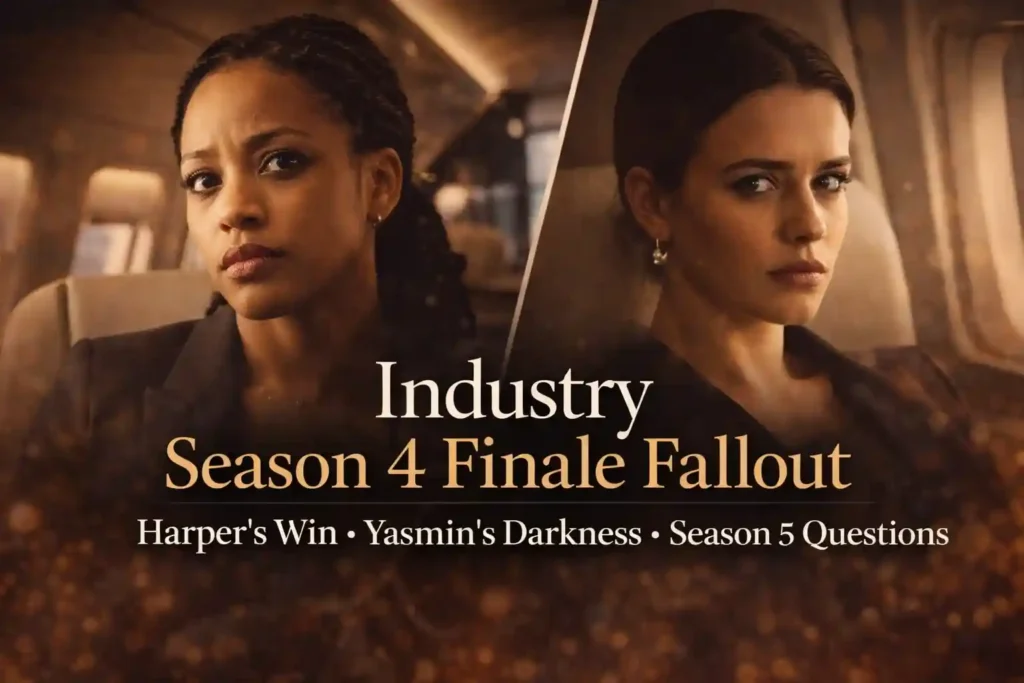
The Season 4 finale of HBO’s Industry, titled “Both, And,” doesn’t just resolve major plot threads—it crystallizes the show’s defining worldview.

Never Miss Your Chance to Audition!
Join our WhatsApp Channel for exclusive casting calls and audition alerts!
Join NowThe phrase “both, and” becomes more than a line of dialogue; it’s the series’ operating principle, a refusal to choose between black-and-white morality in a world that thrives on contradiction.
Yasmin Kara-Hanani (Marisa Abela) delivers the clearest articulation during her confrontation with Harper Stern (Myha’la) at the Paris fundraiser. After Harper discovers Yasmin’s blackmail scheme—secretly recording powerful men with young, some underage, escorts—Yasmin defends her actions without apology: “The world is not exploitation or opportunity. It’s both, and.”
She frames her role as necessary, claiming she eases the pain of the women involved while advancing her own survival and influence. The statement doubles as a confession of her fractured psyche, haunted by her father’s death and looping voicemail, yet it also reveals how trauma can rationalize harm.
Harper echoes the same duality in the episode’s closing scene. On a private jet, an interviewer asks if being uniquely right about the Tender fraud feels like vindication or profound loneliness.
Harper’s answer—“Both, and”—mirrors Yasmin’s logic, acknowledging that her professional triumph comes hand-in-hand with isolation. The stewardess’s interruption—“Are you finished?”—and Harper’s contemplative pause before the cut-to-black leave the question open: Does she crave more conquests, or can she accept balance?
This refrain runs through the entire finale. Henry Muck (Kit Harington) chooses integrity over escape (“I’d rather die as me than run as you”), rejecting the “both, and” compromise of fraud and flight.
Yet even his stand exists in a gray space—he was complicit in Tender’s scheme long enough to be arrested. The show never lets anyone off the hook completely.
Industry has always portrayed high finance as a machine that erodes souls without offering easy heroes or villains. Characters exploit, betray, and justify in equal measure because the system rewards duality: ambition and ethics, loyalty and self-interest, power and pain.
The finale weaponizes this philosophy to deepen the rift between Harper and Yasmin—their once-mutual understanding now fractured by irreconcilable interpretations of the same truth.
As the series heads into its fifth and final season (likely premiering 2027-2028), “both, and” sets the stakes for the endgame.
Will the creators Mickey Down and Konrad Kay allow any character true redemption, or will the show double down on its refusal to resolve moral ambiguity? The finale doesn’t answer; it simply insists that in the world of Industry, nothing is ever just one thing.