
Enzo Tortora Case Explained: How False Pentiti Accusations Destroyed Italy’s TV Icon – Lessons from Marco Bellocchio’s ‘Portobello’ on HBO Max

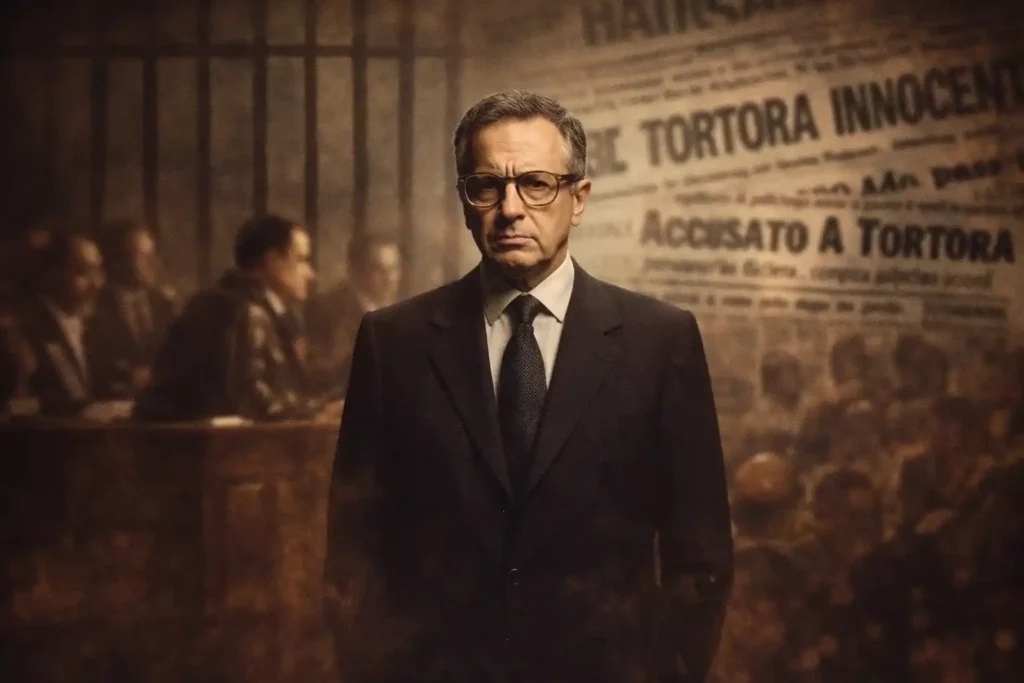
In the glittering world of 1980s Italian television, Enzo Tortora was untouchable. As the charismatic host of Portobello, a groundbreaking RAI variety show that drew up to 28 million viewers on Friday nights, he embodied light-hearted escapism.

Never Miss Your Chance to Audition!
Join our WhatsApp Channel for exclusive casting calls and audition alerts!
Join NowViewers called in to sell quirky items, showcase inventions, seek lost loved ones, or even find romance—often featuring the show’s mascot, a parrot named Portobello, whose refusal to say its own name became a beloved running gag.
Named after London’s famous market, the program pioneered interactive “zoo-TV” formats in Italy, turning ordinary people into stars and making Tortora a national treasure. President Alessandro Pertini even named him a Commander of the Republic.
But on June 17, 1983—known as “Black Friday” in Italian judicial history—Tortora’s life unraveled. Arrested at 4 a.m. in a Rome hotel by Carabinieri officers, he was accused of being a member of the Nuova Camorra Organizzata (NCO), the ruthless crime syndicate led by Raffaele Cutolo, and of trafficking cocaine.
The charges stemmed almost entirely from testimonies by pentiti—mafia “repentants” or turncoats—who were incentivized under Italy’s 1982 legislation to cooperate with authorities in exchange for reduced sentences and protection.
The primary accuser was Giovanni Pandico, a former NCO member and regular Portobello viewer imprisoned with Cutolo.
Pandico claimed Tortora was an “honorary” Camorra associate who owed the organization money from a supposed cocaine shipment. He spun elaborate tales, including one where silk doilies sent by an inmate to appear on the show were coded signals for drugs worth millions of lire.
Pandico alleged telepathic communication with Tortora and vendettas over unpaid “debts.” Other pentiti, including Pasquale Barra and Giovanni Melluso, echoed and amplified these claims, despite no physical evidence—no drugs, no financial records, no corroborating witnesses—linking Tortora to any crime.
Some accusations appeared rooted in mistaken identity (a homonym) or personal grudges, yet prosecutors rushed forward amid the era’s aggressive anti-Camorra crackdowns.
Tortora spent seven months in pretrial detention, then faced a grueling trial in Naples starting in 1985. In the first instance, he was convicted on September 17, 1985, and sentenced to 10 years in prison plus a hefty fine.
The verdict relied heavily on uncorroborated pentito statements, exposing flaws in a system that prioritized volume of testimonies over verification to dismantle organized crime.
The appeals process revealed the accusations’ fragility. Contradictions mounted—some pentiti retracted or were discredited—and on September 15, 1986, the Naples Court of Appeal fully acquitted Tortora.
The Supreme Court of Cassation upheld the decision in 1987, declaring him innocent of all charges. Tragically, the ordeal broke his health; Tortora returned briefly to TV but died of cancer on May 18, 1988, at age 59, with many attributing his decline to the immense stress.
Marco Bellocchio’s six-part limited series Portobello, now streaming on HBO Max (released globally starting February 20, 2026), brings this surreal miscarriage of justice vividly to life.
Premiering episodes at the 2025 Venice Film Festival, the show—HBO Max’s first Italian original—stars Fabrizio Gifuni as Tortora in a mesmerizing performance that captures the host’s intelligence, complacency, bewilderment, and quiet rage.
Lino Musella plays the obsessive, conniving Pandico with magnetic menace, while Bellocchio masterfully contrasts the glitzy chaos of Portobello‘s studio (dancing clowns, hypnotists, the famous parrot) with the grim prison cells and theatrical absurdity of the trial.
Critics have hailed the series as a no-filler triumph: Deadline calls it a “terrific true crime saga” and “timely study” of institutional failures, praising Gifuni as “mesmerizing.”
The New York Times notes its portrait of Tortora as a man more honorable than his accusers, while IndieWire describes it as an “agonizing manifestation” of how stupidity can destroy lives.
Bellocchio’s direction weaves in ironic touches—churches as backdrops, lyrics from Neapolitan songs about taking and giving—to underscore themes of transactional justice and bad-faith actors thriving when their lies align with authorities’ desires.
The Tortora case remains a cautionary tale about overreliance on incentivized informants, media presumption of guilt, and the vulnerability of public figures.
In an era before smartphones, Tortora was defenseless against amplified falsehoods; today, with AI and social media disinformation, such injustices could proliferate faster.
Portobello doesn’t just recount history—it warns that the ease with which innocence can be erased persists, urging vigilance in any system where unchecked accusations hold sway. Stream it on HBO Max to witness one of Italy’s most baroque tragedies, masterfully retold.