Yasmin’s Dark Turn: How the Finale Transforms Her into a Modern Ghislaine Maxwell Figure
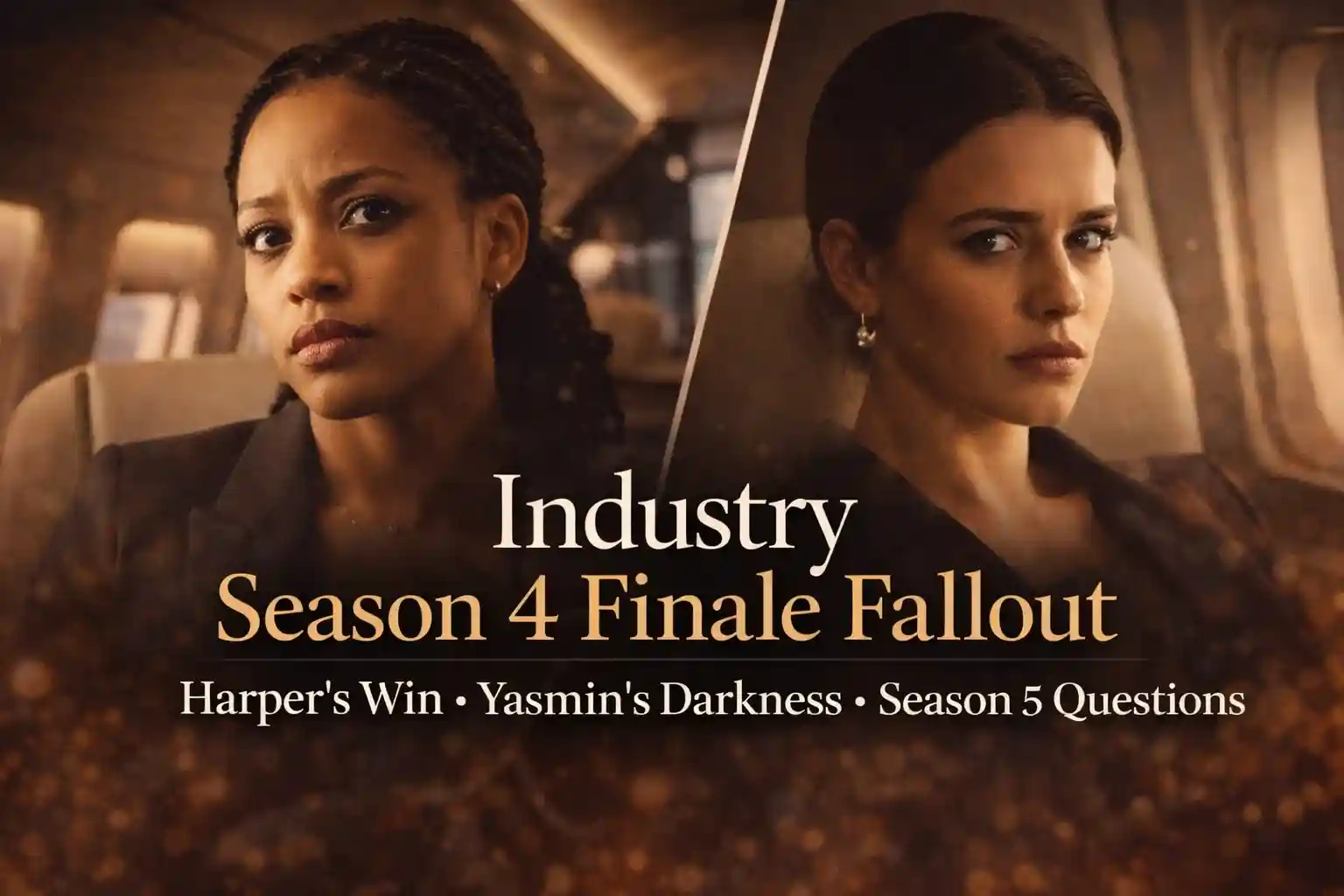
In HBO’s Industry Season 4 finale, “Both, And,” Yasmin Kara-Hanani (Marisa Abela) takes a harrowing leap into darkness.

Never Miss Your Chance to Audition!
Join our WhatsApp Channel for exclusive casting calls and audition alerts!
Join NowThe once-charismatic finance heiress, shaped by privilege and personal loss, reemerges as a calculated enabler of elite exploitation—echoing the real-life trajectory of Ghislaine Maxwell, Jeffrey Epstein’s convicted accomplice in sex trafficking.
The show’s creators, Mickey Down and Konrad Kay, have woven subtle but deliberate parallels between Yasmin and Maxwell from the start.
Yasmin’s father, Charles Hanani—a disgraced media tycoon who dies mysteriously after falling from his yacht, the Lady Yasmin—mirrors Robert Maxwell, Ghislaine’s own scandal-ridden father who perished aboard the Lady Ghislaine.
These biographical echoes, acknowledged by the writers as intentional, set the stage for Yasmin’s descent into moral compromise.
The finale delivers the decisive turn at a Paris fundraiser Yasmin hosts for fringe right-wing politician Sebastian Stefanowicz.
Inviting her former friend Harper Stern (Myha’la), Yasmin seats her next to extremists, testing loyalties. When Harper challenges Yasmin’s alliances, the truth unravels: Yasmin possesses hidden footage of ex-colleague Eric Tao with an underage escort, footage that helped force his exit earlier in the season.
Harper pieces it together—Yasmin is running a blackmail operation, secretly recording powerful men at the event with young escorts, some underage. Hayley (Kiernan Shipka), now in Yasmin’s employ, helps manage the girls.
Yasmin defends her actions with chilling clarity: “The world is not exploitation or opportunity. It’s both, and.” She claims necessity, insisting she’s protecting the women while easing her own trauma—looping her father’s final voicemail as a private torment.
To Harper’s desperate pleas, Yasmin insists she feels “new” and “less pain,” framing her role as empowerment rather than predation. This twisted logic recalls Maxwell’s courtroom defenses, where she positioned herself as an enabler caught in larger webs of abuse and ambition.
Marisa Abela has spoken candidly about the inspiration, describing Yasmin as “loosely” drawn from Maxwell while stressing the character’s unique pain and agency. Abela called the real-world parallels “horrifying,” yet foundational details—like the yacht death—were baked in by Season 3.
This arc sharpens Industry’s unflinching critique of power: how trauma and capitalism twist survivors into perpetrators. Yasmin isn’t Maxwell redux but a fictional lens on how privilege and survival can curdle into monstrosity. Her irreparable break with Harper underscores the cost—loyalty sacrificed to ambition.
With Season 5 confirmed as the final chapter (likely arriving 2027-2028), Yasmin’s path looms larger. Is she beyond redemption, or does the show’s signature “both, and” duality allow one last twist? The finale ends on that razor edge, leaving her fate—and the series’ moral questions—unresolved.